Sindh Institute of Physical Medicine & Rehabilitation (SIPMR)
Sindh Institute of Physical Medicine and Rehabilitation (SIPM&R) is the first and only civilian institute in Pakistan to offer multidisciplinary rehabilitation services to people with disabilities since 2007
Year of Establishment:
2007

Focus Areas:
Education, Healthcare, Disability Inclusion

Geographical Areas of Operations:
Sindh

Beneficiaries:
Children, Youth, Women, Men, Elderly, Transgender

Brief Overview
Every year, the Trust distributes millions of rupees among hundreds of deserving university students. While selecting the students for financial aid, preference is also given to orphans, the disabled, minorities, and students from broken families to enable them to get an education without any financial or psychological pressure.
Established in 2007 and reconstituted as an autonomous provincial body in 2020, the Sindh Institute of Physical Medicine and Rehabilitation (SIPM&R) is the first civilian institute in Pakistan to offer free multidisciplinary rehabilitation services to people with disabilities. The organization aims to create a society where persons with disabilities (PWDs) achieve maximum independence. By providing free services to thousands of patients annually, the institute removes socioeconomic barriers to recovery. The ultimate impact is the functional reintegration of patients into their communities, transforming them from dependent individuals into productive, self-reliant members of society while simultaneously addressing the national shortage of rehabilitation experts through high-quality professional training.
DEPARTMENTS
|
|
SERVICES
|
|
Core Programs and Services
The Sindh Institute of Physical Medicine & Rehabilitation (SIPM&R) is a premier institution dedicated to free, multidisciplinary disability management and specialized medical education. By integrating clinical excellence with academic rigor, the institute serves as a vital hub for rehabilitation in Pakistan.
The institute offers robust educational pathways, including a prestigious FCPS residency in Physiatry for doctors, as well as a diverse range of Allied Health programs. These include a five-year Doctor of Physical Therapy (DPT), four-year BS degrees in Occupational Therapy, Prosthetics & Orthotics, and Audiology, alongside specialized postgraduate diplomas in Autism Spectrum Disorder.
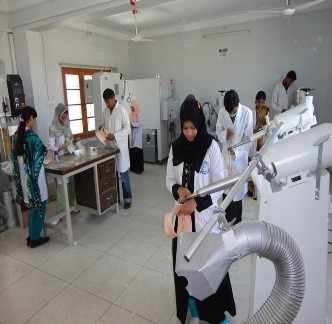
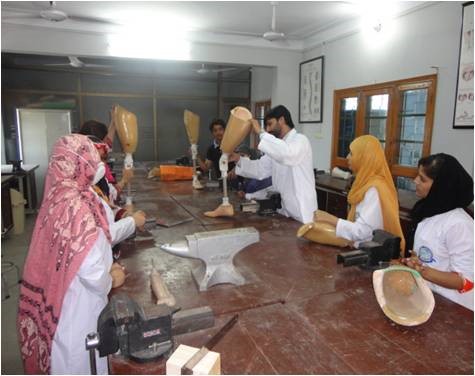
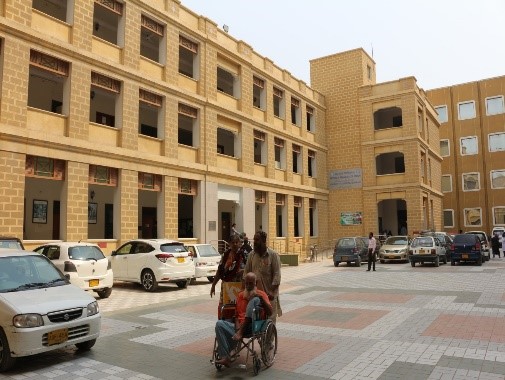
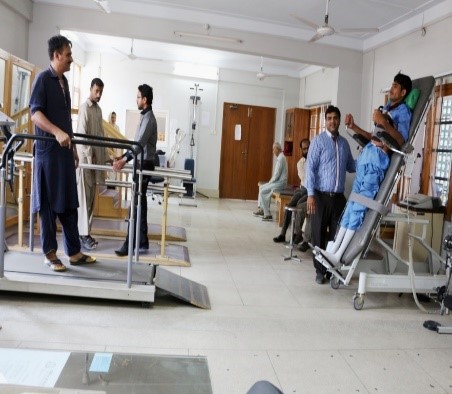
Structurally, SIPM&R operates from advanced facilities in Karachi. The Main Campus features cutting-edge infrastructure, such as telemetry-monitored cardiac gyms and soundproof audiology suites, while the KDA Campus focuses on expanding patient access. Recognizing the need for rural outreach, the institute is aggressively expanding its footprint through regional satellite centers. With established sites in Hyderabad and Larkana and proposed units in Sukkur, Shaheed Benazirabad, and Scheme 33, SIPM&R is decentralizing care to reduce patients’ travel burden. Supported by international-standard labs and prosthetic workshops, the institute continues to lead in restoring functional independence for the people of Sindh.
What Makes Our Approach Distinct
SIPM&R’s uniqueness lies in its “Under one Umbrella Model” that integrates advanced free multidisciplinary rehabilitation services with specialized Rehabilitation Physiatrists. Unlike other healthcare institutions, it functions as a public-sector autonomous body, ensuring sustainability through government-backed infrastructure and a “train-the-trainer” approach that solves the national shortage of rehabilitation experts.
Innovation is driven by its specialized Cardiac Rehab and Autism Management units, which are unique to Pakistan’s public sector. Community ownership is fostered by providing free, culturally inclusive services and custom-made prosthetics, empowering minority patients to transition from dependency to self-reliant, productive society members
Impact Story
At eighteen months, Hooriya’s world went silent. Once a lively toddler, she stopped speaking and withdrew into the overwhelming hyper reactivity of Autism Spectrum Disorder. For years, her mother searched for answers, facing these challenges alone until they discovered the Center for Child Development at SIPM&R.
At age four, Hooriya began a transformative journey through sensory integration and occupational therapy. The institute provided a structured support system that addressed her sensory defensiveness and behavioral triggers. The impact was profound: Hooriya evolved from a child terrified of simple sounds into a young girl who could follow commands, brush her teeth, and eat independently.
The ultimate milestone came during her most recent birthday. Previously triggered by the “Birthday Song,” Hooriya joyfully sang along and cut her cake for the first time in years. Her journey at SIPM&R stands as a powerful testament to how specialized, compassionate intervention can turn silent struggles into milestones of celebration.