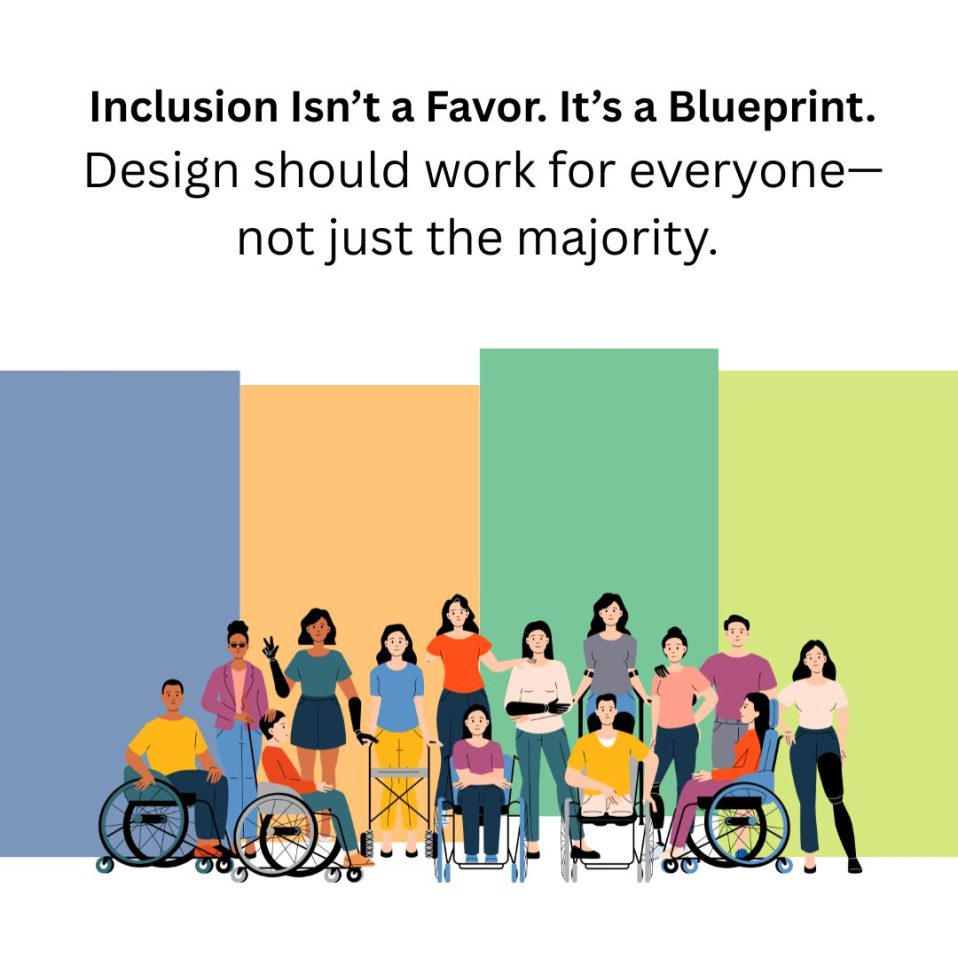
“Inclusion isn’t about fitting people into an existing space. It’s about transforming the space, so everyone belongs.”
You walk into a building, take the stairs, join a conversation, and sip tea without a second thought. Everything feels natural and effortless.
Now, picture Ali. He’s a bright student in a wheelchair who wants to become an engineer. But each day, he battles cracked sidewalks, buildings with no ramps, elevators that don’t work, and buses that he can’t climb. These remind him that the world wasn’t built with him in mind.
His struggle isn’t with ability, it’s with design. The world, as it stands, wasn’t built for him.
Design with Dignity
Inclusion starts at the blueprint. From wider doorways to tactile flooring, small design choices can create big change. For instance, the Panjwani-Hisaar Water Institute (PHWI) campus has included a parallel ramp in its structure. It wasn’t an add-on; it was part of the plan. That’s not just access. That’s dignity.
Digital Spaces Matter
The internet is a public space. Accessibility features like captions, screen-reader compatibility, and high-contrast design aren’t upgrades; they’re essentials. Build apps and sites that work for everyone, or risk locking people out.
Culture Builds Belonging
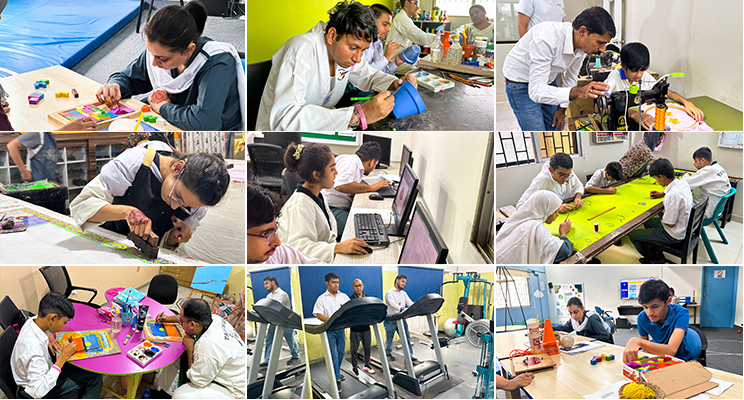
Inclusion isn’t just physical, it’s cultural. Sign-language theatre, adaptive sports, and accessible events create shared experiences. Visibility leads to community. Leadership comes when everyone has a seat at the table.
Everyday Empathy
Ask “How can I help?” Use simple language. Print in large fonts. Hire inclusively. Teach disability etiquette. Normalize accommodation. Inclusion is not a campaign; it’s a culture built daily.
From Policy to Practice
Laws need teeth. Regular audits, inclusive training, and assistive tech subsidies turn policy into progress. Measure impact not by paperwork, but by the lives made easier.
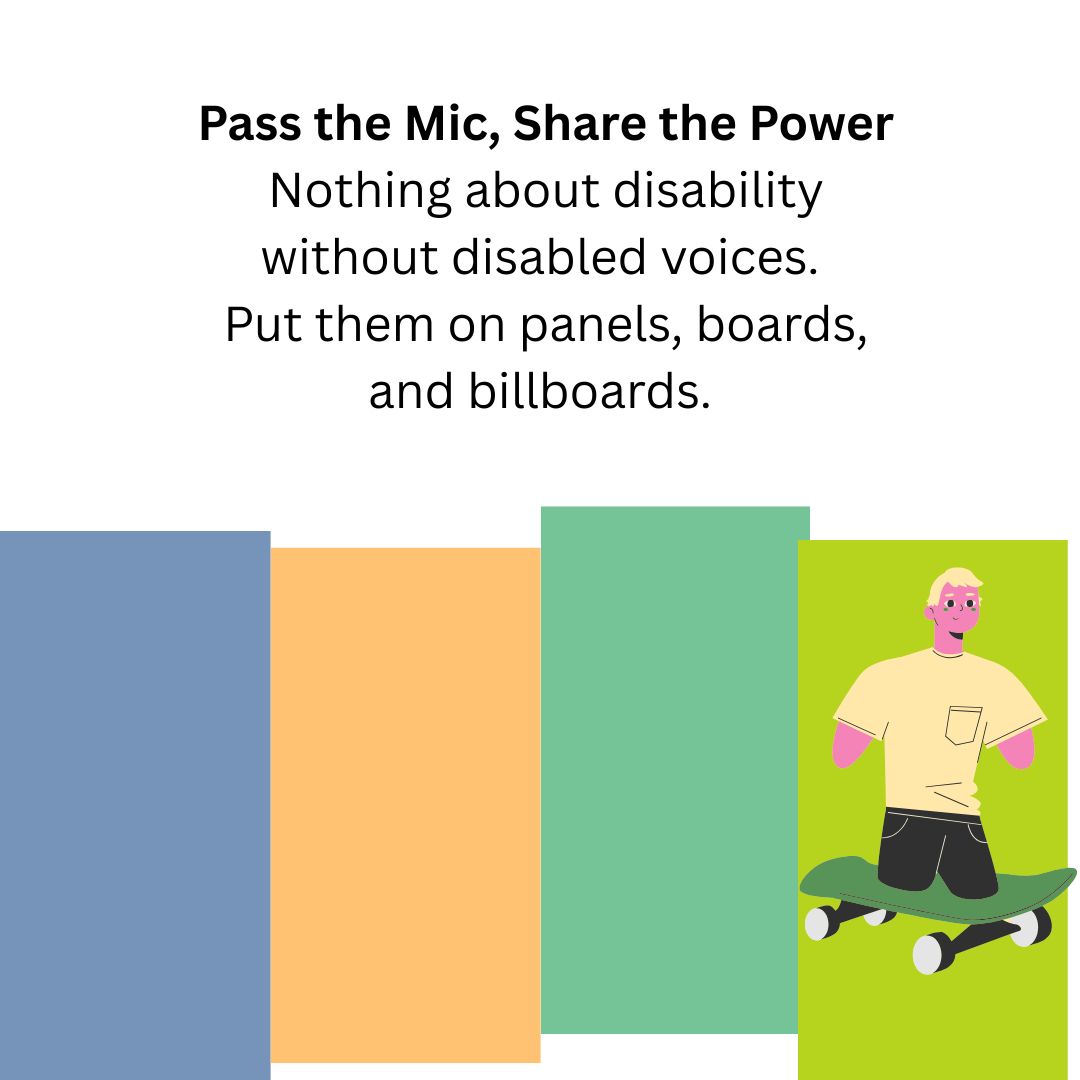
Pass the Mic
Design nothing about disability without disabled voices. Put them in rooms of power, as leaders, creatives, and decision-makers. Representation isn’t symbolic. It’s a structural change.
Flip the Blueprint
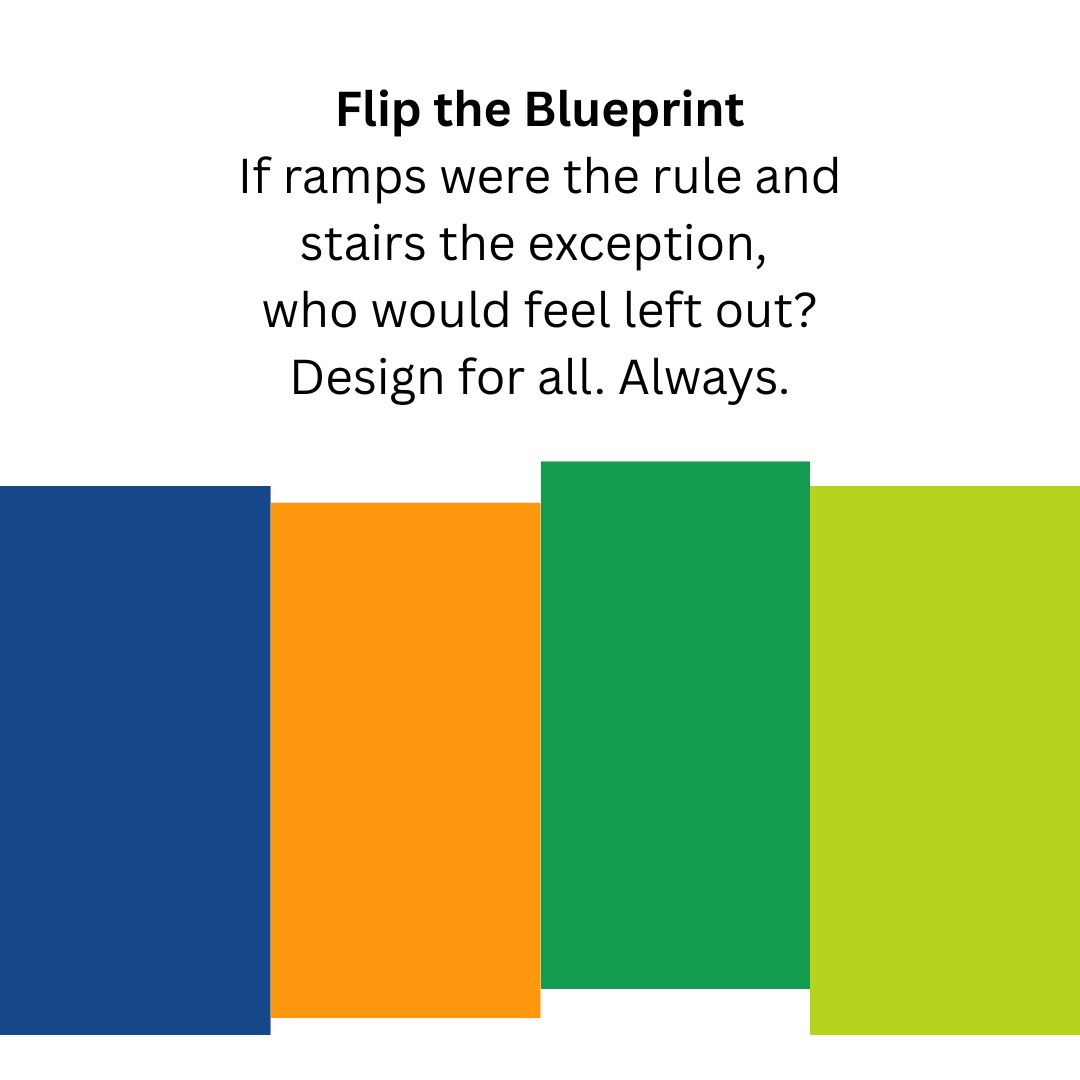
Imagine if stairs were the exception, silence was the language, and ramps were everywhere. Inclusion isn’t a favor; it’s how shared spaces are meant to be built. Not for “them”, but for all of us.
Build for Everyone.
Design with all in mind.
Because access isn’t generosity—it’s justice.